Support bandaging is often judged by pressure, padding, and secure placement. Yet comfort and movement can determine whether a patient keeps it on. This is why the question “why is flexibility important in support bandaging” deserves closer attention. A flexible bandage can follow the ankle as it bends, accommodate moderate swelling, and reduce rigid edges that rub against the skin. Fit is not static. A morning wrap may feel different after walking, standing, or climbing stairs.
The World Health Organization reports that about 1.3 billion people, or one in six worldwide, live with significant disability. Many require support that protects function without unnecessarily restricting movement (WHO, Disability and Health, 2023). In lower-limb care, compression remains clinically important. A Cochrane review found that compression bandages improve venous leg-ulcer healing compared with no compression, although outcomes vary by system, pressure, and patient factors (O’Meara et al., Cochrane Database of Systematic Reviews, 2012). Flexibility supports practical use, but it does not replace trained assessment.
A useful bandage should move with the body while maintaining consistent support. Picture a knee bending repeatedly during a short walk. The material must stretch, recover, and remain secure without creating sharp pressure points. Small details matter. Skin temperature, limb shape, circulation, and daily activity can change performance. Evidence about flexibility alone is still limited, which deserves honest acknowledgment. Clinicians should follow manufacturer instructions, assess circulation, and review the wrap regularly. A perfect bandage does not exist. The safest choice balances support, mobility, comfort, and real-world adherence.
What Flexibility Means in Support Bandaging
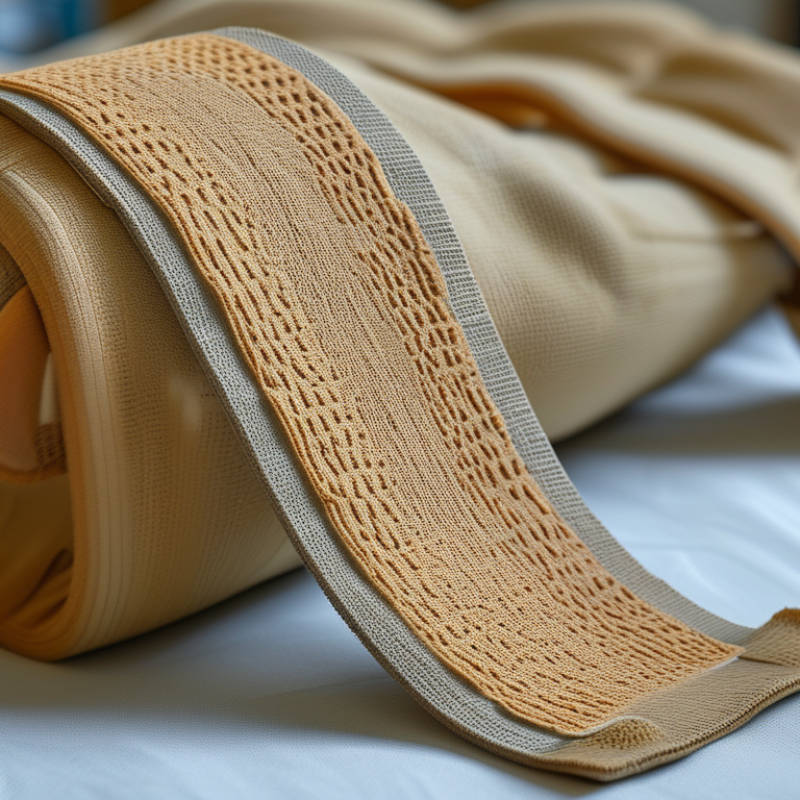
Flexibility in support bandaging means more than simple stretch. It describes how a bandage follows movement, adapts to body shape, and returns toward its original form. A flexible layer can move with a calf as the ankle bends or with a wrist during daily tasks. Movement changes everything.
In practical use, flexibility should feel controlled, not loose. The material needs enough elasticity to support tissues without creating hard edges or restricting circulation. It should also accommodate normal changes in swelling throughout the day. A bandage that feels comfortable in the morning may become too tight later. Checking skin color, temperature, sensation, and swelling is important, especially after application. Numbness, increasing pain, or cold fingers and toes require prompt professional attention.
I once thought greater stretch always meant better support. That assumption was too simple. Excessive flexibility may lose tension quickly, while limited flexibility can bunch behind a joint and irritate the skin. The right balance depends on the injury, body area, movement level, and application technique. Breathable fibers and a stable weave can improve comfort, but they cannot correct poor fitting. For postoperative care, significant swelling, or suspected circulation problems, a trained healthcare professional should guide the choice. Even experienced users can wrap unevenly. Small mistakes matter.
Why Is Flexibility Important in Support Bandaging? - What Flexibility Means in Support Bandaging
Flexibility allows a support bandage to adapt to body movement, changes in limb shape, and changes in swelling while maintaining useful support.
Key Flexibility Factors in Support Bandaging
| Data Dimension |
What Flexibility Means |
Practical Benefit |
Typical Application |
Risk When Flexibility Is Inadequate |
| Conformability |
The bandage can follow curved and changing body contours without creating large gaps or folds. |
Promotes more even contact and reduces local pressure points. |
Joints, ankles, knees, wrists, and other areas with changing circumference. |
Gaps may reduce support, while folds may concentrate pressure on the skin. |
| Stretch and recovery |
The material can extend during movement and return toward its original length when tension is released. |
Helps the bandage accommodate normal movement without becoming loose immediately. |
Activity-related support and areas that repeatedly flex and extend. |
Excessive stretch or poor recovery may lead to slipping or inconsistent support. |
| Movement accommodation |
The bandage permits controlled movement rather than acting as a rigid immobilizer. |
Can improve comfort and allow necessary functional movement. |
Routine mobility, walking, light daily activities, and support around mobile joints. |
A bandage that is too rigid may restrict movement and increase discomfort. |
| Pressure adaptation |
The material responds to changes in limb size and muscle activity while remaining in contact with the skin. |
Supports a more consistent fit as swelling or movement changes. |
Short-term management of swelling and general soft-tissue support. |
Uneven tension can create excessive pressure in some areas and insufficient support in others. |
| Edge flexibility |
The edges bend and move with the body instead of cutting sharply into the skin. |
Improves comfort and reduces edge-related rubbing or indentation. |
Longer wear periods and bandaging across areas that move frequently. |
Stiff or rolled edges may cause friction, pressure marks, or skin irritation. |
| Breathability and surface movement |
The bandage can flex against the skin while allowing some heat and moisture to escape, depending on its construction. |
May improve comfort during wear and reduce moisture accumulation. |
Warm environments, active use, and extended daytime wear. |
Excess moisture can contribute to maceration, odor, or skin irritation. |
| Ease of application |
The material can be positioned and adjusted smoothly without excessive force or complicated handling. |
Helps the user apply support more evenly and repeatably. |
Self-application, first-aid use, and situations requiring frequent adjustment. |
Difficult-to-control stretch may produce uneven tension or an unstable wrap. |
| Balance between flexibility and support |
The bandage provides enough give for comfort while retaining sufficient resistance for the intended supportive purpose. |
Combines mobility with functional support instead of prioritizing only one. |
General soft-tissue support where complete immobilization is not required. |
Too much flexibility may provide little support; too little may restrict circulation or movement. |
Note: The actual stretch, pressure, and support characteristics vary by material, width, construction, application technique, and the number of layers used. A support bandage should feel secure but not cause numbness, tingling, increasing pain, unusual coldness, or color changes in the limb.
The Role of Flexibility in Comfort and Circulation
Flexibility matters because a support bandage must move with the limb, not fight it. During walking, the calf expands and contracts repeatedly. A flexible layer can follow this movement and maintain more even contact around the ankle, heel, and calf. It also reduces hard edges that may rub the skin or create local pressure points. Small details matter.
The Cochrane Database of Systematic Reviews reported that compression improves venous leg-ulcer healing compared with no compression. However, pressure must remain appropriate for the person’s circulation. NICE guidance recommends checking arterial circulation before applying strong compression, often using an ankle-brachial pressure index assessment. Wounds UK best-practice guidance also stresses comfort, correct fitting, and regular skin checks. These recommendations support a practical point: comfort is not cosmetic. Pain, numbness, cold toes, or unusual swelling may signal excessive pressure or poor application. The bandage should feel supportive, never aggressively tight. In real use, flexibility can help during movement, but it cannot correct an unsuitable size or technique. That is where I would be cautious. A trained clinician should assess circulation, wound condition, and the patient’s response before continued use.
How Flexibility Balances Support and Freedom of Movement
Why Is Flexibility Important in Support Bandaging?
How Flexibility Balances Support and Freedom of Movement
Support bandaging should stabilize tissue without turning movement into a struggle. A flexible bandage follows the calf, ankle, or wrist as it changes shape. This matters during walking, lifting, and ordinary household tasks. Too rigid, and pressure may concentrate around bony areas. Too loose, and support can disappear within minutes.
The World Health Organization’s 2022 musculoskeletal health report estimates that 1.71 billion people live with musculoskeletal conditions worldwide. The CDC’s 2022 National Health Interview Survey also reported chronic pain among 20.9% of U.S. adults. These figures underline a practical need: support should protect function, not merely restrict it. A flexible layer can adapt when muscles contract and joints bend. It may also reduce slipping, which can create uneven pressure.
Comfort is not proof of correct application. Check skin color, temperature, sensation, and swelling regularly. Fingers and toes should remain warm and responsive. A clinical observation worth remembering is simple. Too tight is not stronger.
Bandaging technique still needs professional judgment. Injury type, circulation, swelling, and skin condition change the safe pressure level. I have sometimes underestimated how quickly swelling alters fit; that mistake deserves reflection. Reassessment after movement is essential. If numbness, increasing pain, discoloration, or cold skin appears, remove the bandage and seek qualified medical advice. Flexibility supports freedom only when the bandage remains controlled, secure, and clinically appropriate.
Choosing the Right Flexibility for Different Bandaging Needs
Flexibility matters because a support bandage must move with the body. A rigid wrap can restrict walking and create pressure points near the ankle or knee. An elastic bandage stretches as muscles contract, helping maintain contact during movement. Yet excessive stretch may increase resting pressure, especially when the wearer is lying down.
Choose flexibility according to the task. High-stretch materials suit active users who need consistent support during daily movement. Short-stretch materials offer firmer resistance when muscles work, while producing lower resting pressure. They may suit mobile patients with swelling, but require skilled application. For fragile skin, a softer and more forgiving layer can reduce friction. Small details matter.
Evidence supports careful selection. A Cochrane review covering 48 studies and 4,321 participants found compression more effective than no compression for venous leg ulcers. Multi-component systems also improved healing compared with single-component systems, with a risk ratio of 1.35. However, stronger is not automatically better. Clinicians should assess circulation, sensation, swelling, and mobility before applying compression. NICE guidance recommends vascular assessment when arterial disease is suspected. I still find firm feels safer
an easy assumption to make. It is not always correct. Recheck the skin, warmth, colour, and comfort after application.
(Sources: Cochrane Review, 2012; NICE Guideline NG152.)
Conclusion
Flexibility is a key quality in support bandaging because it allows a bandage to move naturally with the body while still providing reliable support. Rather than restricting every movement, flexible materials can stretch, adjust to changes in muscle position, and follow the contours of different body areas. This adaptability helps reduce discomfort, pressure points, and unnecessary tightness during everyday activities.
Understanding why is flexibility important in support bandaging also means recognizing its effect on circulation and freedom of movement. A well-balanced bandage should offer stability without feeling rigid or interfering with normal motion. The right level of flexibility depends on the purpose of the bandage, the body area being supported, and the user’s activity level. Choosing appropriately flexible material can improve comfort, encourage consistent use, and provide effective support while allowing the body to move more naturally.
 Sanva Medical
