Elastic supports look simple, yet their performance can vary sharply. A knee sleeve may feel secure during a short walk but slip during repeated squats. A wrist support may reduce strain, while another creates uncomfortable pressure near the thumb. These differences are rarely accidental. They often reflect material quality, design, sizing, and the user’s movement pattern.
The central question is: what factors affect the effectiveness of elastic support? Elastic tension matters, but stronger compression is not automatically better. A support must apply consistent pressure without restricting normal circulation or joint movement. Breathable fabric can reduce sweat buildup, while reinforced stitching may improve stability around high-motion areas. Fit is equally important. A loose support may bunch behind the knee, and an overly tight one may leave visible marks or numbness.
Practical experience shows that comfort influences real-world use. People remove supports that itch, slide, or feel restrictive. That detail is easy to overlook. Activity level, body shape, injury history, and wearing duration also change results. Medical guidance should remain part of the decision, especially after injury or surgery. Even careful designs have limitations. A support cannot correct every movement problem, and evidence may differ between products and users. Reliable evaluation therefore requires checking construction, fit, user feedback, and guidance from qualified healthcare professionals. Small details matter. Good support is not merely tight; it is controlled, comfortable, and appropriate for the task.
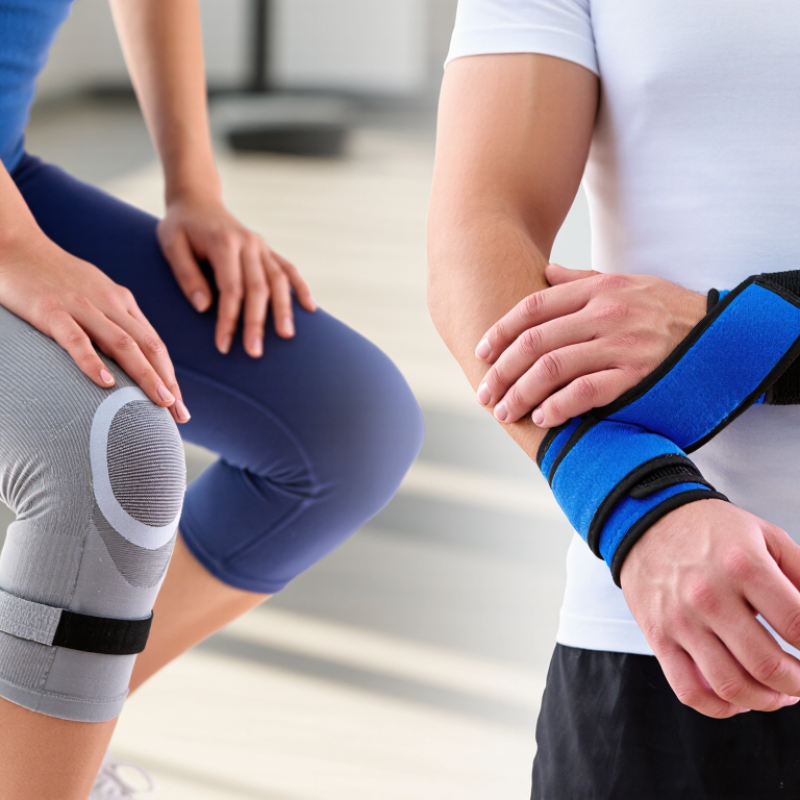
Elastic supports are components that carry a load while allowing controlled movement. They may use springs, rubber pads, flexible joints, or layered elastomers. Unlike rigid supports, they deform slightly under pressure. When the load changes, they return toward their original shape.
This movement helps absorb vibration, reduce shock, and distribute force more evenly. For example, a support under a machine may compress when equipment starts. It can then limit rattling transferred to the floor.
In a wearable support, elastic material can follow body movement while applying gentle pressure. The function depends on stiffness, thickness, temperature, and loading direction. Small details matter.
A useful support should match the actual load, not an estimated one. Engineers often check compression, recovery, fatigue, and long-term deformation during testing. A support that feels firm may still lose performance after repeated cycles.
I have also found that installation errors can change results. Uneven contact creates concentrated stress. Excessive tightening can prevent natural movement.
Elastic materials are not perfectly predictable, either. Heat, moisture, age, and chemical exposure may alter their response. Measurements should therefore be repeated under realistic conditions.
A simple visual inspection is helpful, but it cannot replace load testing. The best choice is sometimes less obvious.
Why Do Some Elastic Supports Work Better Than Others?
Which Materials and Designs Determine Their Performance?
Elastic supports perform differently because their materials respond to heat, load, moisture, and repeated movement. Natural rubber offers strong flexibility and vibration isolation, but sunlight, oils, and ozone can shorten its service life. EPDM handles weather and heat more reliably, while silicone remains stable across wider temperature changes. Polyurethane often provides higher wear resistance, although it may feel too stiff for delicate equipment.
Design matters as much as material. A support with the correct hardness can absorb vibration without allowing excessive movement. Its shape also controls performance. A thick, short element usually carries heavy compression, while a slender profile allows greater deflection. Engineers must examine load direction, frequency, shear forces, and available space before selecting a design.
Small details matter. Bonded layers can prevent slipping between rubber and metal. Rounded edges reduce stress concentrations. Proper preload can improve stability, but excessive preload may reduce flexibility and accelerate fatigue. During equipment inspections, uneven compression often reveals poor alignment rather than weak material.
Real conditions can challenge laboratory results. Dust, temperature swings, and installation errors are easy to underestimate. I have seen supports fail earlier because a mounting surface was slightly uneven. That detail is easy to miss. Testing should include realistic cycling, not only a single static load. Even careful designs need review after installation, because actual movement may differ from the original calculation.
Material and design factors that influence elastic-support performance
The chart shows representative continuous service-temperature ranges for commonly used elastomer materials. Actual limits vary with formulation, compound hardness, loading, geometry, aging, and environmental exposure.
An elastic support works best when it fits the body’s shape, not merely its size. In practical fitting, I check the edges first. They should sit flat without digging into the skin. A loose support may slide during movement. An overly tight one can cause numbness, tingling, or skin discoloration. These signs deserve attention, not endurance.
Pressure also changes support quality. Even pressure can improve comfort and limit unwanted movement. Concentrated pressure may create painful hot spots around seams or bony areas. The right level depends on the body part, activity, and individual tolerance. A support used during walking may need different tension than one worn while resting. Measurement guides help, but they cannot replace careful adjustment.
Stability comes from fit, pressure, and movement working together. The support should stay in place when the joint bends, turns, or bears weight. I have found that small adjustments often matter more than extra tightness. Still, fit is not always perfect. Swelling can change throughout the day, and fabric can loosen with washing. Check the skin after use, especially during the first few sessions. Stop using the support if pain, persistent numbness, or unusual color changes appear, and seek professional advice when symptoms continue.
Elastic supports do not perform equally because bodies do not move equally. A sleeve that feels stable during a slow walk may pinch during stairs. Movement changes pressure, skin tension, and joint position. During fitting, observe the support while standing, bending, and taking several steps. A perfect fit on a chair can fail in motion.
Individual needs should guide the choice. Someone with mild swelling may need gentle, even compression. Another person may need more control after an injury, but stronger is not automatically better. Size, limb shape, skin sensitivity, activity, and medical history all matter. A clinician or trained fitter can check circulation, comfort, and movement quality. Pain, numbness, unusual coldness, or color changes require prompt removal and professional advice. These signs should not be ignored.
Daily habits also affect results. A support may work well for a short walk but become uncomfortable after eight hours at work. Moisture, folded fabric, and incorrect placement can create pressure points. I used to think tighter meant more support; that assumption was too simple. The better question is whether the support helps movement without creating new problems. Needs can change as swelling, strength, or recovery changes.
Choosing an effective elastic support begins with fit, not appearance. It should feel secure without causing numbness, sharp pressure, or skin discoloration. Measure the intended body area when swelling is lowest, if possible. A healthcare professional can confirm the size and compression level, especially after injury or surgery. In practice, small fit errors matter. A support that rolls at the edge may restrict movement and reduce comfort.
Tips: Check the material for softness, stretch, and breathability. Put it on slowly, without twisting the fabric. Smooth wrinkles with your fingertips. Inspect your skin after thirty minutes. Remove the support if pain, tingling, unusual coldness, or color changes appear. Wash it according to the care instructions, then air-dry it fully. Heat can weaken elastic fibers.
Maintenance affects performance more than many users expect. Repeated washing, harsh detergents, and stretched storage can reduce support. Keep the item flat or loosely folded in a dry drawer. Replace it when the fabric becomes loose, uneven, or difficult to position. I have sometimes kept a familiar support too long; that was convenient, but not sensible. Comfort alone does not prove effectiveness. A support should assist movement while allowing normal circulation and regular skin checks.
It should follow your body’s shape, not only match a measurement. Edges should lie flat without digging into skin. Too loose?
Numbness, tingling, pain, unusual coldness, or skin discoloration are warning signs. Remove it and seek professional advice if symptoms continue.
Even pressure can improve comfort and reduce unwanted movement. Concentrated pressure may cause painful hot spots near seams or bony areas.
Yes. A support may feel stable in a chair but pinch during stairs or bending. Test it while standing, walking, and turning.
Consider body shape, swelling, skin sensitivity, activity, and medical history. Stronger compression is not automatically better. Needs can change.
Put it on slowly without twisting the fabric. Smooth wrinkles with your fingertips. Folds can create small pressure points.
Check the skin after about thirty minutes and after early uses. Look for redness, unusual color, coldness, pain, or tingling.
Follow the care instructions and air-dry it fully. Avoid harsh detergents and high heat. Store it flat or loosely folded.
Replace it when fabric becomes loose, uneven, or difficult to position. I have kept familiar supports too long. That was convenient, not sensible.
Elastic supports are designed to provide controlled compression, gentle stabilization, and improved comfort around a joint or body area during daily activities or exercise. Their effectiveness depends on several connected elements. The fabric’s elasticity, breathability, durability, and ability to maintain consistent pressure influence performance, while the support’s shape, stitching, reinforcement, and adjustability determine how well it stays in place. A balanced design should offer support without restricting normal circulation or movement.
The key question is what factors affect the effectiveness of elastic support? Proper fit is essential: a support that is too loose may slide and provide little assistance, while one that is too tight may cause discomfort. Body movement, activity level, body shape, and individual needs also affect how well it works. Users should select the appropriate size and support level, follow care instructions, inspect the material for wear, and keep it clean and dry. With suitable design, correct fitting, and regular maintenance, an elastic support can provide reliable comfort and stability.

Sanva Medical