Sports injury prevention is changing quickly as athletes, coaches, and clinicians use better data and more individualized training. The key question is simple: what are the latest trends in sports injury prevention? In 2026, effective prevention will likely combine wearable monitoring, movement screening, strength training, recovery planning, and practical athlete education.
This guide explores seven promising trends shaped by sports medicine research and real training-room experience. These include artificial intelligence for workload insights, neuromuscular warm-ups, sleep tracking, customized strength programs, and smarter return-to-play decisions. A runner may adjust weekly mileage after repeated fatigue signals. A football player may use landing drills after video analysis reveals knee control problems. Small changes can matter.
Still, technology is not a cure.
Wearable devices can produce impressive charts, yet poor data can support poor decisions. Artificial intelligence may identify patterns, but it cannot replace a qualified clinician’s assessment. Even well-designed prevention programs sometimes fail because athletes lack time, confidence, or consistent support. That weakness deserves attention. The best strategies should be realistic, evidence-informed, and flexible enough for different ages, sports, and competition levels. Readers should view these trends as tools, not guarantees. Injury risk can be reduced, but it cannot be completely removed.
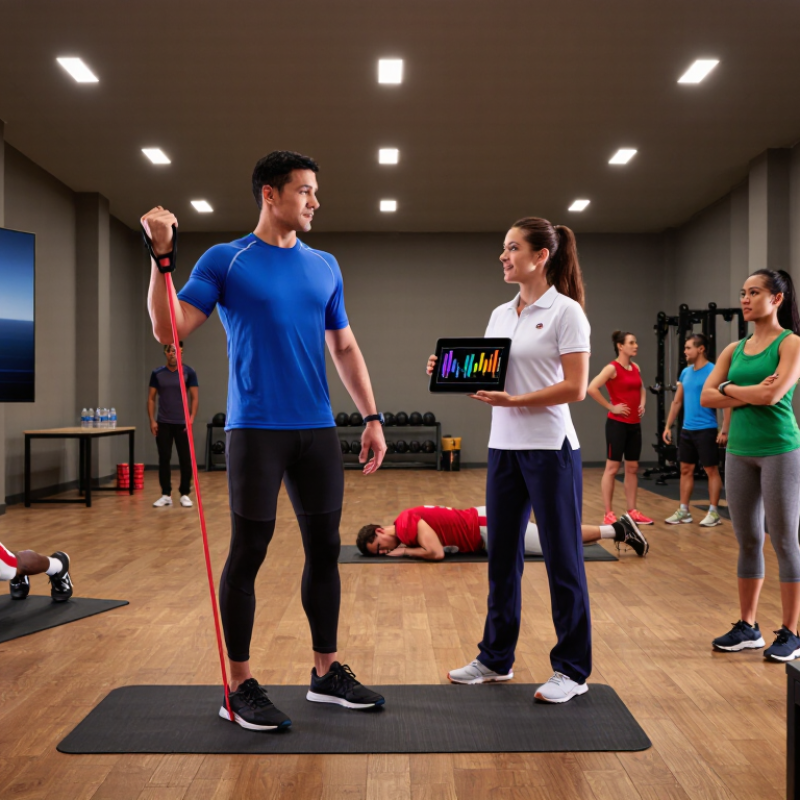
Sports injury prevention is evolving in 2026. It is moving beyond tape, stretching, and last-minute treatment. Teams now combine workload tracking, movement screening, sleep data, strength testing, and individual recovery plans.
The 2025 ACSM Worldwide Survey of Fitness Trends ranked wearable technology first, showing how common real-time monitoring has become. However, a dashboard cannot understand every athlete. Human judgment still matters.
The NCAA Injury Surveillance Program has repeatedly reported higher injury rates during competition than practice across many sports. This supports smarter training loads, better landing technique, stronger hamstrings, and gradual return-to-play plans.
Neuromuscular warm-ups are also gaining attention, especially for knee injury prevention. Video analysis can reveal a collapsing knee or poor trunk control before pain appears.
Still, prevention is not perfect. Data may identify risk, but it cannot predict every awkward landing.
Tips: Track changes, not just totals. Increase training gradually. Protect sleep. Record pain early.
Use simple drills, such as single-leg balance on a firm floor. Coaches should review workload data weekly with medical staff, not react after an injury.
The World Health Organization reported that 31% of adults worldwide were insufficiently active in 2022, reinforcing the value of progressive conditioning. Some athletes will resist slower progress. That resistance deserves discussion, not punishment.
By 2026, injury prevention will begin before pain appears. AI systems can combine training load, sleep, previous injuries, movement quality, and wellness scores. A morning survey may take less than one minute. The output should be a risk range, not a medical verdict.
The World Health Organization’s 2022 Global Status Report on Physical Activity found that 31% of adults worldwide were insufficiently active. For athletes, the challenge differs. Excessive training and poor recovery can create a narrow margin for error. An algorithm might flag a sudden workload spike after three intense sessions. Coaches can then reduce sprint volume, extend recovery, or adjust strength exercises. The International Olympic Committee’s injury-prevention guidance supports monitoring both external load and internal response.
Numbers matter. Context matters more.
Personalized training should feel practical. A runner with tight calves may receive fewer downhill intervals. A basketball player reporting poor sleep may complete skill work instead of repeated jumps. The model still needs human judgment. It may confuse exam stress with fatigue. It may overlook family history or concealed pain. British Journal of Sports Medicine research on predictive models also warns that promising accuracy does not equal clinical certainty. That limitation is important. Coaches should record why they accepted or rejected an alert, then review outcomes monthly. The system must learn from mistakes, not hide them.
7 Best Sports Injury Prevention Trends in 2026?
Wearable sensors are becoming practical tools for real-time movement and fatigue monitoring. Small units can track acceleration, jump height, joint angles, and training load. A 2024 review in Sports Medicine found that wearable inertial sensors often provide moderate-to-good accuracy for external-load measurements. However, accuracy changes with body placement and movement type.
The numbers matter during a hard session. A sudden drop in jump height may reveal fatigue before poor technique becomes obvious. The International Olympic Committee’s consensus on load management links excessive training stress with higher injury risk. Meanwhile, U.S. national injury surveillance has estimated about 8.6 million sports and recreation injuries annually. Coaches can combine sensor data with pain reports, sleep quality, and perceived effort. One number is never enough.
Fatigue is not always dramatic.
A runner may keep pace while landing unevenly. A basketball player may jump normally but absorb force poorly. Sensors can expose these quiet changes, yet they cannot explain every cause. A loose strap, sweat, or poor calibration can distort results. That weakness needs attention. Staff should compare readings with video, clinical testing, and athlete feedback. Data should support decisions, not replace professional judgment. In 2026, the strongest systems will likely be those that detect change early, explain uncertainty clearly, and remain simple enough for daily use.
| Rank | Wearable Sensor Trend | Primary Data Captured | Real-Time Injury-Prevention Use | Typical Alert Indicators | Practical Benefit | Evidence and Limitations |
|---|---|---|---|---|---|---|
| 1 | Inertial Movement Monitoring IMUs combining accelerometers and gyroscopes |
Acceleration, angular velocity, body orientation, step symmetry, jump and landing mechanics | Detects sudden changes in running form, landing control, cutting technique, or limb symmetry during training and competition. | Higher impact peaks, increased trunk rotation, reduced knee or hip control, asymmetrical stride, or repeated abnormal movement patterns | Provides immediate technique feedback and helps coaches reduce excessive mechanical loading before symptoms become serious. | Well-established measurement approach. Accuracy depends on sensor placement, calibration, sampling rate, and sport-specific validation. |
| 2 | Fatigue-Responsive Load Monitoring Combining external movement load with internal physiological load |
Acceleration counts, high-intensity efforts, heart rate, heart-rate recovery, session duration, and perceived exertion | Compares current workload with an athlete’s recent baseline to identify excessive spikes or inadequate recovery. | Declining heart-rate recovery, rising exertion at the same workload, reduced movement quality, or an abrupt increase in high-intensity activity | Supports individualized training adjustments instead of relying only on fixed schedules or team averages. | Useful for monitoring trends. There is no universal injury-risk threshold; workload ratios should not be treated as a stand-alone diagnosis. |
| 3 | Smart Insoles and Pressure-Sensing Footwear | Plantar pressure distribution, contact time, center of pressure, loading rate, and left-right balance | Identifies altered weight transfer and excessive or repeated pressure in the heel, forefoot, or medial and lateral regions. | Persistent pressure asymmetry, increased loading rate, reduced contact-area variation, or changes from the athlete’s normal gait pattern | Helps guide running-form changes, return-to-play decisions, footwear adjustments, and rehabilitation progress. | Clinically relevant for gait assessment. Results can vary with shoe type, foot shape, sensor durability, and calibration method. |
| 4 | Muscle-Activity and Muscle-Oxygen Monitoring Wearable electromyography and near-infrared sensing |
Muscle activation timing, recruitment patterns, local oxygenation, and recovery response | Shows whether muscles are compensating, activating too early or late, or failing to recover during repeated efforts. | Increasing activation for the same task, delayed recovery, abnormal co-contraction, or a sustained reduction in local oxygenation | May reveal fatigue-related compensation before visible technique deterioration occurs. | Promising and increasingly portable. Signals are sensitive to electrode or sensor placement, movement artefacts, tissue characteristics, and task selection. |
| 5 | On-Body Biometric and Recovery Tracking Continuous heart rate, heart-rate variability, skin temperature, and sleep-related measures |
Heart rate, heart-rate variability, skin temperature, sleep duration, sleep regularity, and recovery trends | Flags reduced readiness when physiological recovery is consistently worse than the athlete’s personal baseline. | Higher resting heart rate, lower overnight heart-rate variability, elevated skin temperature, short sleep, or repeated poor recovery scores | Encourages earlier rest, hydration, medical review, or training modification when combined with symptoms and performance data. | Useful for longitudinal monitoring. These measures are non-specific and can be affected by illness, stress, alcohol, travel, heat, and measurement conditions. |
| 6 | Edge Analytics and Instant Feedback Processing sensor data on or near the athlete |
Low-latency movement features, fatigue indicators, event counts, and personalized deviations from baseline | Delivers immediate vibration, visual, or audio feedback without waiting for a post-session report or continuous internet connection. | Repeated high-impact events, excessive workload accumulation, movement-quality decline, or a rapid departure from the athlete’s normal pattern | Improves intervention timing and reduces dependence on manual video review during high-volume training. | Technically feasible with modern low-power devices. Alerts require careful thresholds to limit false positives, missed events, and unnecessary interruptions. |
| 7 | Multimodal Digital Athlete Profiles Combining wearable, training, clinical, and contextual data |
Movement metrics, physiological signals, training history, injury history, environmental conditions, and athlete-reported symptoms | Builds an individualized risk picture and identifies whether a change is mechanical, physiological, environmental, or symptom-related. | Multiple small deviations occurring together, such as reduced sleep, elevated exertion, asymmetry, and declining movement quality | Supports more precise load management, rehabilitation progression, and shared decisions between athletes, coaches, and clinicians. | Strong direction for 2026. Predictive models need representative validation, transparent interpretation, secure data handling, and human clinical oversight. |
In 2026, sports injury prevention is becoming less about pushing harder and more about recovering intelligently. Sleep remains the simplest intervention, yet many athletes treat it as optional. Most adults need at least seven hours, while heavy training may require more. A regular bedtime, a cool dark room, and reduced evening screen exposure can support muscle repair, reaction time, and decision-making. One poor night will not ruin a season. Repeated poor sleep can quietly increase risk.
Nutrition also needs to match training demands. Carbohydrates help fuel intense sessions, while protein supports tissue repair. A practical meal might include rice, eggs, vegetables, and fruit within a few hours after training. Fluids and electrolytes matter during long, hot sessions. Personal needs vary, so rigid plans can fail. Athletes should monitor energy, body weight changes, digestion, and training quality with a qualified nutrition professional.
Regenerative care is attracting attention, but it should not be sold as a miracle shortcut. Clinically supervised rehabilitation, progressive loading, mobility work, and strength testing remain central. Some injection-based therapies have limited or mixed evidence for specific injuries. A licensed sports medicine clinician should explain benefits, risks, costs, and alternatives before treatment. Imaging alone cannot decide readiness. Pain may improve before tissue capacity returns. That gap deserves respect. Recovery is rarely perfectly linear, and even careful athletes sometimes return too soon.
Reported injury-reduction estimates are strongest for structured neuromuscular, strength, and balance programs. Sleep optimization, adequate protein intake, load management, and individualized regenerative care are increasingly used to support recovery, but their direct injury-reduction percentages remain condition-specific and are not combined with the prevention estimates shown above.
In 2026, injury prevention is shifting from generic protection to sport-specific design. The NCAA Injury Surveillance Program has repeatedly shown higher injury rates during competition than practice, although patterns differ across sports. Safer equipment now means better fit, impact management, and regular inspection. A loose mouthguard or worn helmet can undermine excellent coaching. Small details matter.
Surfaces need equal attention. Shock absorption, traction, and moisture control should match the sport and athlete level. The International Olympic Committee’s consensus guidance links injury reduction with structured workload planning, strength, balance, and neuromuscular training. Wearable monitoring can identify sudden workload spikes, but its data is not automatically reliable. Human review remains essential. Keep checking.
Sport-specific training is becoming more practical. A basketball program may combine landing mechanics, deceleration, ankle control, and repeated jump exposure. A football program may emphasize neck strength, tackling technique, hip mobility, and recovery intervals. The CDC estimates that millions of sports and recreation injuries occur annually in the United States, showing why prevention cannot rely on one device or one exercise. Coaches should use progressive drills, not sudden intensity changes. Athletic trainers should record pain, fatigue, surface conditions, and equipment failures.
The weak point is implementation. Even strong protocols fail when athletes hide symptoms or staff skip documentation. Prevention is not perfectly predictable. It needs feedback, adjustment, and honest review after every near miss.
It now combines workload tracking, movement checks, sleep data, strength testing, and recovery planning. Tape alone is not enough.
No. It can show workload changes and recovery patterns, but it cannot understand every awkward landing. Human judgment remains necessary.
They should track workload changes, sleep, pain, wellness, and movement quality. Sudden increases deserve attention.
It can combine training history, sleep, previous injuries, and wellness scores. Its result should guide discussion, not deliver a medical verdict.
Coaches may reduce sprint volume, extend recovery, or change strength exercises. They should record why the decision was made.
Neuromuscular warm-ups, hamstring strengthening, landing drills, and single-leg balance can help. Use a firm floor and controlled movement.
Poor sleep can reduce recovery and increase decision errors. A tired basketball player might practice skills instead of repeated jumps.
Progress should be gradual, with workload and symptoms reviewed regularly. Rushing back can create a narrow margin for error.
No. An algorithm may confuse exam stress with fatigue or miss hidden pain. Promising accuracy is not clinical certainty.
They should discuss the concern rather than punish it. The plan may still be imperfect, so outcomes need monthly review.
Sports injury prevention is becoming more personalized, predictive, and data-driven in 2026. If you are asking, “what are the latest trends in sports injury prevention,” the answer begins with AI-powered risk screening that analyzes movement patterns, training history, workload changes, and previous injuries to identify potential problems early. This information can help coaches and athletes create individualized training plans that improve performance while reducing unnecessary strain.
Wearable sensors are also supporting real-time monitoring of movement quality, fatigue, balance, and recovery status. At the same time, smarter recovery strategies combine consistent sleep, balanced nutrition, hydration, mobility work, and carefully supervised regenerative care. Prevention is also improving through safer equipment, more adaptable playing surfaces, and sport-specific training designs that prepare athletes for realistic demands. Together, these developments encourage earlier intervention, better workload management, and a more complete approach to long-term athletic health.

Sanva Medical