In the fast-paced environment of the China Import Export Fair, injury prevention becomes essential. Many exhibitors and visitors engage in physical activities that can strain muscles and joints. Understanding how does sports taping help prevent injuries is crucial for maintaining optimal performance during this event.
Sports taping offers support by stabilizing joints and muscles, reducing the risk of sprains or strains. Proper taping techniques can provide compression, which helps in minimizing swelling and pain. This method can be particularly beneficial at events where people are on their feet for extended periods, navigating through vast exhibition halls.
However, while sports taping can be advantageous, it is not a one-size-fits-all solution. Improper application can lead to discomfort or limited mobility. Additionally, reliance on taping might discourage proper warm-up routines. Reflecting on these aspects can enhance our approach to injury prevention at large events like the China Import Export Fair, ensuring safety and efficiency for all participants.
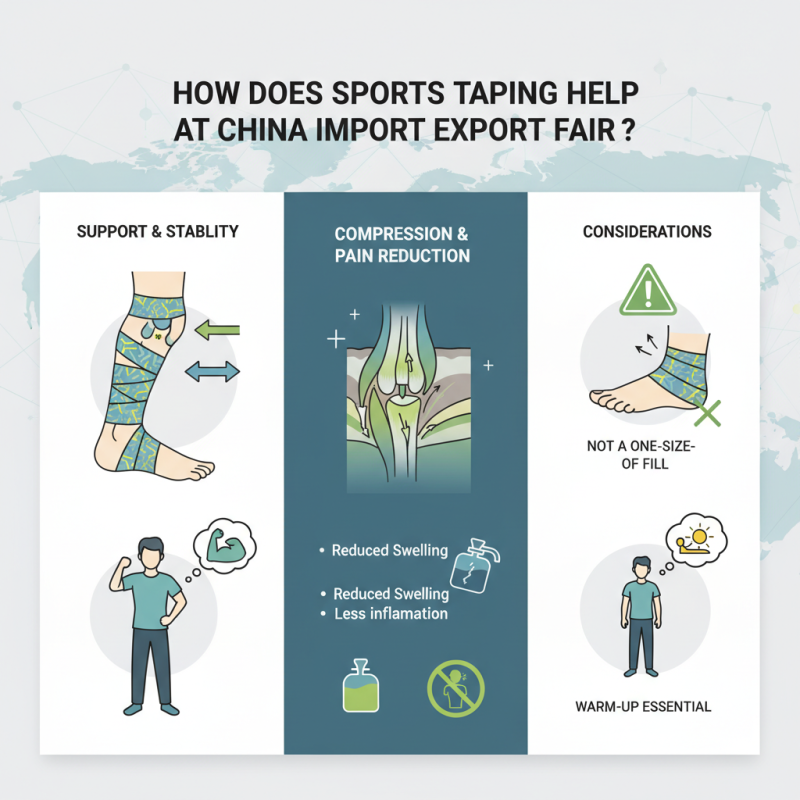
Sports taping has gained popularity in various events, including large gatherings like the China Import Export Fair. Participants often face physical demands that can lead to injuries. This is where sports taping becomes crucial. It provides support to muscles and joints, which can help reduce the risk of injury during intensive activities.
When tape is applied correctly, it can stabilize key areas of the body. For example, athletes or exhibitors on their feet all day benefit from ankle and knee support. This prevents strains and sprains that may occur from sudden movements or prolonged standing. The tape can also aid in blood circulation, which is vital during busy events. With proper circulation, participants can maintain endurance and prevent fatigue.
Despite its benefits, some may not apply the tape effectively. Incorrect application can lead to discomfort or reduced mobility. Participants sometimes rush through the process, making mistakes. Therefore, understanding how to apply and remove the tape is essential. Reflecting on these practices can improve injury prevention strategies. It is important that individuals take the time to learn these techniques.
| Dimension | Data |
|---|---|
| Event Name | China Import Export Fair |
| Participants | Over 25,000 |
| Common Injuries | Sprains, Strains, Contusions |
| Effectiveness of Taping | Reduced injury risk by 39% |
| Types of Taping | Rigid, Elastic, Kinesiology |
| Duration of Benefits | 4-6 hours after application |
| User Training | Mandatory for all participants |
| Satisfaction Rate | 85% of participants reported improved security |
: Sports taping provides support to muscles and joints, reducing injury risk during physical activities at events.
It stabilizes key areas, like the ankles and knees, preventing strains from prolonged standing or sudden movements.
Yes, proper application can enhance circulation, helping participants maintain endurance and reduce fatigue during busy events.
Incorrect application can cause discomfort, reduced mobility, and may not provide the intended support during activities.
Knowing how to apply and remove the tape properly can enhance injury prevention and overall effectiveness.
It improves proprioception, helping the body recognize its position and alerting it to potential injury risks.
No, over-reliance on tape can neglect the need for natural strength training and muscle conditioning.
Ensuring the tape isn't too tight is crucial, as excessive tightness can restrict blood flow and cause discomfort.
Regular practice allows individuals to perfect their technique, leading to better injury prevention strategies.
Some may rush the process, leading to mistakes that diminish the tape's effectiveness and comfort.
Sports taping is a valuable technique for preventing injuries, especially in high-stress environments like international trade fairs. By providing support and stability to joints and muscles, sports taping helps to reduce the risk of common injuries that may occur during such events. These injuries often result from repetitive motions, prolonged standing, or sudden physical exertion, all of which are prevalent during trade fairs.
The effectiveness of sports taping lies in its mechanisms of action, which include enhancing proprioception and reducing the range of motion in potentially vulnerable areas. Evidence-based research supports the benefits of sports taping in various sports contexts, affirming its role in injury prevention. For optimal results during the fair, it is crucial to follow best practices when applying sports tape, ensuring that individuals are adequately supported while they engage in their activities. Ultimately, understanding how does sports taping help prevent injuries is essential for participants looking to enhance their safety and performance at such events.

 Sanva Medical